She was the ‘great whore, infamous above all others’.
Mary is remembered as a ‘great whore, infamous above all others’. This characterization comes from a letter written by papal legate Rodolfo Pio da Carpi, Bishop of Faenza, dated 10 March 1536—or more precisely, from how that letter has been translated into English. The English translation, published in the tenth volume of Letters and Papers in 1877, states that:
‘Francis said also that they are committing more follies than ever in England, and are saying and printing all the ill they can against the Pope and the Church; that ‘that woman’ pretended to have miscarried of a son, not being really with child, and, to keep up the deceit, would allow no one to attend on her but her sister, whom the French king knew here in France per una grandissima ribalda et infame sopre tutte’.
Historians who base their interpretation of Mary’s character accepted this translation, mistakenly believing that Mary was the ‘grandissima ribalda’, ‘great whore’. The word ‘riblada’ is not synonymous with a ‘whore’, or ‘prostitute’.
I returned to the original letter written in Italian, and discovered that Mary Boleyn is not specifically mentioned in it. In his original letter, Rodolfo Pio da Carpi said that Francis I told him that:
‘that woman [Anne Boleyn] pretended to have lost a male child, even though she was not pregnant. To better conceal this deception, she did not allow anyone except one of her sisters to attend her in this matter, whom His Majesty has known here in France as a great wanton and, above all, infamous’.
When Pio da Carpi referred to ‘one of her [Anne’s] sisters,’ he did not name Mary Boleyn in particular. Anne had only one sister, which is why the editors of the Letters and Papers seriesinterpreted Pio da Carpi’s comment as referring specifically to Mary Boleyn, even though she is not mentioned in the dispatch.
She was less intelligent than Anne.
Mary is usually portrayed as less intelligent than Anne, but there is no evidence that her education was neglected or that she was not a diligent student. She was selected to join the household of Princess Mary Tudor, Henry VIII’s younger sister, who married Louis XII of France in October 1514, so she must have been considered a good choice and perhaps spoke French fluently at that point. A lot has been inferred about Mary’s potential based on the unproven assumption that it was her younger sister Anne who was selected to join the household of Archduchess Margaret of Austria, Regent of the Netherlands. However, in my book I raise the possibility that it was actually Mary, and not Anne, who may have served the archduchess
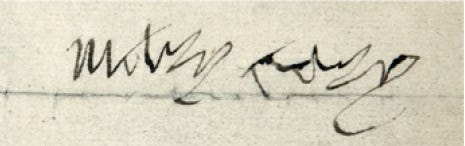
Mary’s Signature
She was not ambitious.
Mary married William Stafford for love in 1534 and was banished from court because she did not ask for her family’s approval. Many historians assume that Mary was happy to settle down in the countryside and leave court, but the letter she wrote to Thomas Cromwell does not support this view. Mary was ambitious for herself and for William, and she wanted him to return to court to serve the King. Stafford was ‘of an ancient stock [noble family] and again as meet [suitable] (if it was his Grace’s pleasure) to do the King’s service as any young gentleman in his court’. Stafford was able to return to court in 1539.
She was more attractive than Anne.
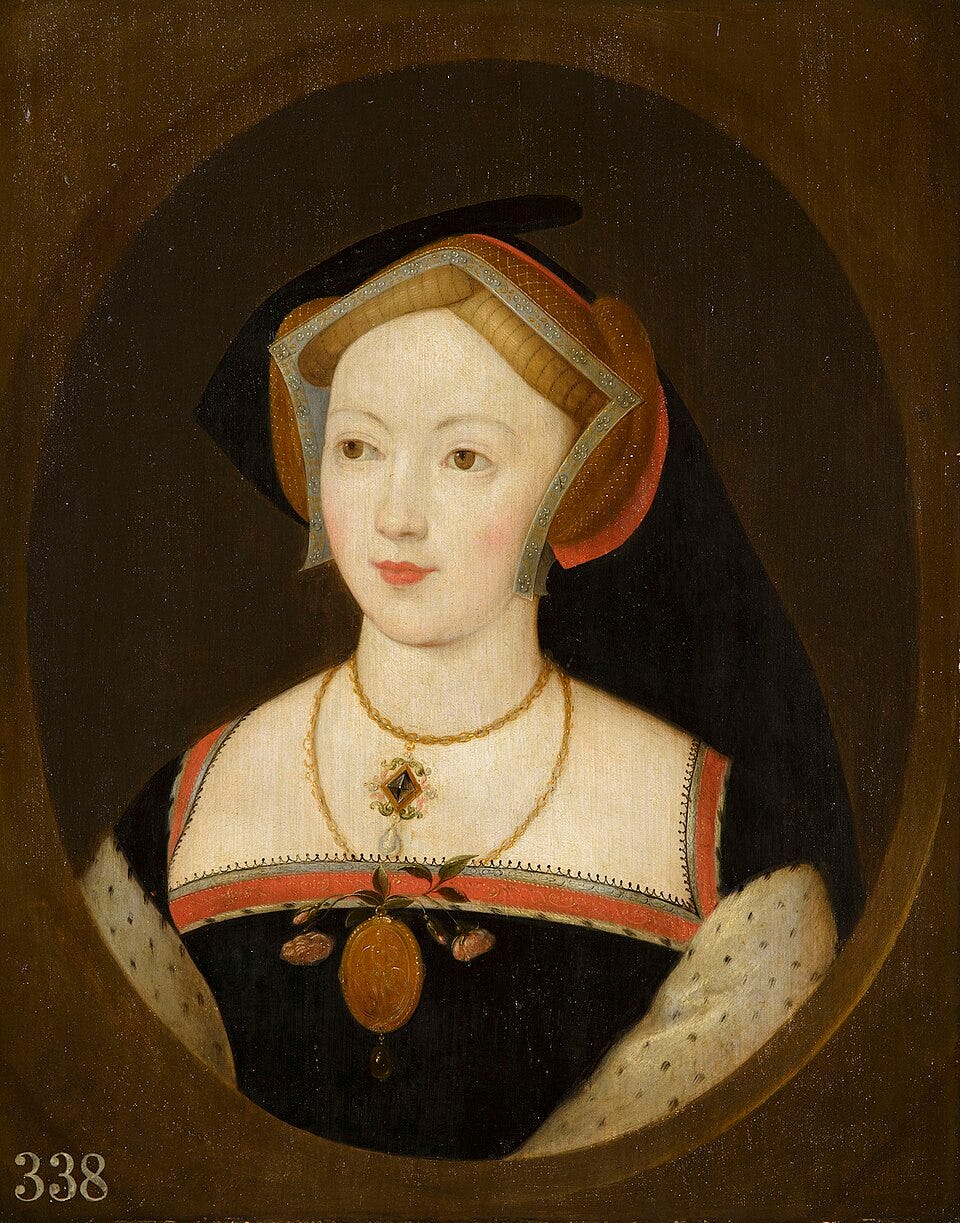
Many historical narratives portray Mary with idealized features—typically blonde hair and bright eyes. Yet no contemporary record definitively describes what she truly looked like. A portrait of Mary, from which several copies were made, is now preserved in the Royal Collection, while other versions are displayed at Hever, Longford, Rockingham, and Warwick Castles. The question remains whether this portrait type derived from a now-lost original painted during Mary’s lifetime, or whether it was commissioned posthumously by her children, who took pride in their connection to Elizabeth I through her mother, Anne Boleyn, Mary’s younger sister.
She was the mother of Henry VIII’s illegitimate children.
Mary was Henry VIII’s mistress but the details of their relationship, such as the dating and duration of their romance, are not known. She had two children born during her marriage to William Carey – Katherine c. 1524 and Henry in 1526.
In 1535 a rumour suggested that Henry Carey was Henry VIII’s illegitimate son – that’s it, just one rumour. Historians have speculated that Catherine Carey may have been Henry VIII’s daughter, partly due to a portrait of an unidentified woman, currently labelled as Catherine, that depicts a woman bearing a resemblance to the King. However, the woman’s identity remains uncertain, and there were no contemporary rumours to suggest that Catherine was his child.
The legal implication was that Mary’s children were William Carey’s because they were born while Mary was married to William. Henry and Catherine Carey never openly spoke about Henry VIII being their father. Their elaborate tombs at Westminster Abbey proclaim William Carey as their father and allude to their maternal and paternal ancestries, including the coats of arms of the Carey, Spencer, Beaufort and Boleyn families.
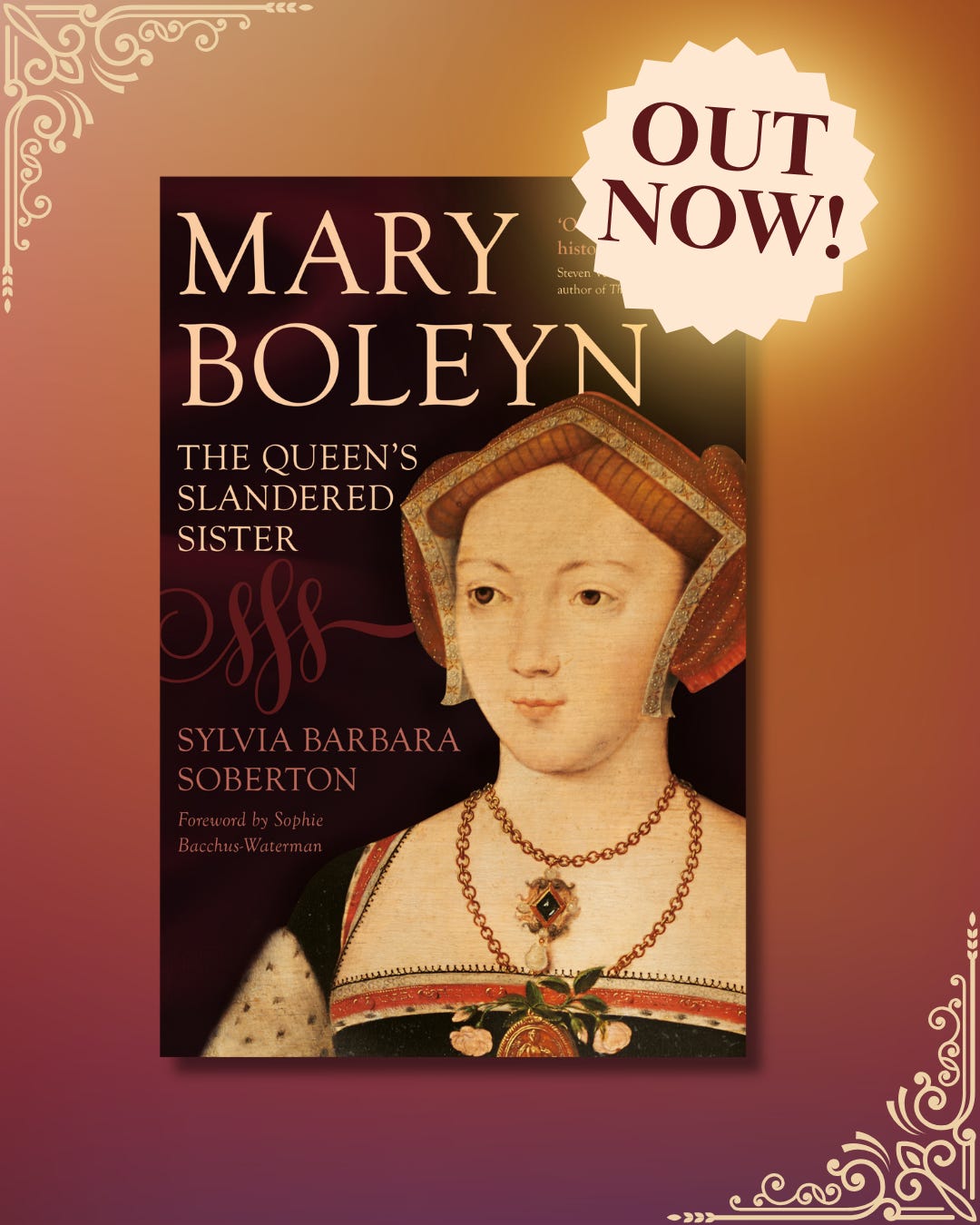
My new book Mary Boleyn: The Queen’s Slandered Sister, is available NOW in bookshops and online.
Rebecca Larson's History Corner is a reader-supported publication. To receive new posts and support my work, consider becoming a free or paid subscriber.